News Feed
RBI New Rules from Oct 4: Cheque Payments to Clear Within Hours Instead of Days

The Reserve Bank of India (RBI) is changing how cheque payments clear across the country. Starting from October 4, 2025, cheque payments will no longer take days to settle. Instead, they will clear within hours. This will make cheque payments faster and easier for banks, businesses, and customers. This change comes with the introduction of a new clearing system. It is called Continuous Clearing and Settlement on Realisation (CCSR). It works under the Cheque Truncation System (CTS). The system will process cheque payments in real time during banking hours. This article explains the new RBI rules and what they mean for everyone who uses cheques.
Table of Contents


What Are the RBI’s New Rules for Cheque Payments?
The RBI has set rules that move cheque clearing from batch processing to a continuous, real-time system. This will speed up the time it takes to clear cheque payments by a large margin. Here are the main points of the new rules:
- Real-time Clearing: Banks will scan and present cheques continuously between 10:00 AM and 4:00 PM.
- Hourly Settlements: The clearing and settlement will happen every hour from 11:00 AM onward.
- Quick Confirmation: Banks must confirm if a cheque is honoured or dishonoured on the same day.
- Automatic Clearing (Phase 1): From October 4, 2025, to January 2, 2026, if a bank does not respond by 7:00 PM, the cheque will be considered cleared.
- Item Expiry Rule (Phase 2): Starting January 3, 2026, a cheque must be confirmed within T+3 clear hours — meaning, if a cheque is received at 11:00 AM, it must be confirmed by 2:00 PM or it will clear automatically.
- Fund Release: Once cleared, the presenting bank must release the funds to the customer’s account within one hour.News feed
This system is designed to clear cheques much faster and make funds available to customers quickly.
Visualizing a Cheque: Key Elements
To better understand how cheques look and function, here’s a detailed annotated image highlighting key components of a typical cheque:

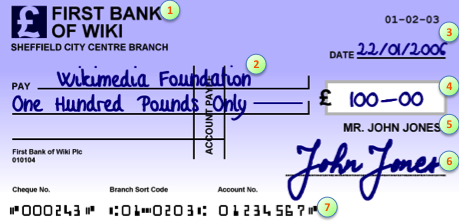
Cheque – Wikipedia
Why Are These New Rules Important?
Cheque payments have long been slower compared to electronic transfers. These RBI changes will bring many positive benefits.
Faster Clearing of Payments
Today, cheque clearing can take up to two working days. The new rules cut this time down to just a few hours. This is a big win for anyone waiting on cheque payments.
More Convenience for Customers
With faster clearing, customers get their money sooner. This is useful for all kinds of users — from individuals managing their daily expenses to businesses handling cash flow.
Less Risk of Payment Issues
Since banks must confirm cheque status hourly, there will be less confusion and fewer cases of unexpected cheque bounce or delay.
Better Transparency
Customers will know the status of their cheque payments on the same day. They won’t have to guess if the cheque was cleared or rejected.
The New Clearing System in Action
Here’s a quick video introduction to how the RBI’s new cheque clearance process will revolutionize payments by shortening wait times: <blockquote> Watch this explainer video to understand the faster cheque clearing system being introduced by RBI, demonstrating how real-time cheque processing improves efficiency and customer satisfaction.
How Will the New Cheque Clearing Process Work?
Here is a simple summary of the daily clearing timetable under the new RBI rules:
| TIME | ACTIVITY |
|---|---|
| 10:00 AM – 4:00 PM | Continuous scanning and presentation of cheques |
| 11:00 AM onward | Hourly settlement cycles start |
| By 7:00 PM (Phase 1) | Drawee banks confirm cheque status |
| T+3 Clear Hours (Phase 2) | Cheques must be settled or auto-clear |
This means that cheques will be processed quickly and settled multiple times a day. The process is planned to run smoothly without waiting for the day to end. For a clear step-by-step guide on how to write and handle cheques properly, which will help people adapt to this faster process, refer to this helpful visual:


How To Write A Check: A Step-By-Step Guide | Bankrate
What Should Banks Expect?
Banks must upgrade their systems to handle real-time cheque clearing. The RBI expects all banks to be ready by October 4, 2025. Banks will need better software and faster backend processes. Also, banks will have less batch work at the end of the day. They will confirm cheque status hourly, lowering the chance of errors. For banks processing large volumes, bulk cheque payment solutions can help manage the transition efficiently:


Bulk Check Payments: How to Send Payments to Many at Once
What Should Customers Expect?
- Faster credit of cheque payments into their accounts.
- Clear updates on cheque status during the day.
- Better cash flow and planning without long waits.
- Less worry over cheque bounce due to timely confirmations.
How Will This Impact Businesses and Daily Users?
Small businesses and traders who often rely on cheque payments stand to gain the most. Faster cheque clearing improves cash flow and reduces payment delays. Companies dealing with bulk cheques will find the process smoother and more reliable. Even retail customers will appreciate quicker access to funds. This shift will help banks serve their clients better and make cheque payments a stronger option alongside digital payments.
Additional Context: Why Cheques Still Matter in India
Despite digital payment growth, many people and businesses in India and the US continue to rely on cheques for various reasons such as trust, documentation, and legacy systems. Understanding this context helps explain why RBI’s reform is critical to modernizing cheque payments without disrupting these users.


Why in the US do people and businesses still use checks to pay their bills?
A Look at the Downsides of Accepting Check Payments
While the new RBI rules offer significant improvements, check payments have inherent disadvantages such as risks of fraud and processing delays, traditionally making electronic payments preferable. This infographic summarizes some challenges:


Paying with Checks: Everything You Need To Know
Summary: Key Facts About the RBI’s New Cheque Payment Rules
- From October 4, 2025, cheque payments will clear in hours, not days.
- Clearing will happen continuously from 10 AM to 4 PM.
- Hourly settlement cycles will start from 11 AM.
- Banks must confirm cheque status by 7 PM during Phase 1.
- Phase 2 introduces a strict confirmation deadline of T+3 clear hours.
- Banks must release cleared funds to customers within one hour.
This reform by RBI will give cheque payments a new lease on life. It will make cheque clearing faster and more transparent. The change will serve customers and banks well, making cheque payments easier and more reliable for everyone. By improving cheque payment speed, the RBI ensures this traditional payment mode stays useful and relevant alongside electronic payment options. It is a win for the banking system and the Indian public alike.
Further Reading and References:
- No More 2-Day Wait! RBI To Bring Same-Day & Hourly Cheque Clearance Starting This Month
- RBI’s new rule: Cheques to clear in just hours starting this date
- RBI new rules from Oct 4: Cheque payments to clear within hours instead of days
- From same day credit to credit within hours, how RBI is revolutionising cheque clearance process