News Feed
Modi Ji’s Independence Day Speech: Next-Generation GST Reforms Set to Transform India’s Tax System

On August 15, 2025, Prime Minister Narendra Modi announced a bold plan for next-generation GST reforms during his Independence Day speech. These changes aim to simplify the Goods and Services Tax and reduce the tax burdens faced by millions of taxpayers across India. The government plans to roll out these reforms by Diwali 2025.
The new GST system will bring relief to middle-income families, MSMEs, small businesses, and everyday consumers.
Table of Contents


Why Next-Generation GST Reforms Are Needed
Since its launch in 2017, GST has helped unify India’s tax system. However, problems remain:
- Multiple tax rates make compliance confusing.
- Inverted duty structures trap working capital.
- Disputes on classification of goods and services create uncertainty.
These challenges hurt businesses and slow growth.
Modi Ji’s reforms focus on three goals:
- Simplify GST slabs for easier understanding.
- Fix inverted duty structures.
- Provide long-term clarity in tax policies.
The aim is to make GST simpler, fairer, and more business-friendly.
Key Features of the Next-Generation GST Reforms
1. Simplifying GST Rates into Two Slabs
Currently, GST rates range from 5% to 28%, which creates confusion. Modi Ji proposed cutting this down to just two slabs:
- Standard slab: Covers most goods and services.
- Merit slab: Covers essential and daily-use items.
Nearly all goods currently taxed at 12% could move to the 5% slab, lowering costs for families and reducing inflation on common products.NEWS


As Economic Times reports, industry leaders have welcomed this move, noting that simplifying slabs could stimulate demand and encourage broader compliance.
2. Fixing Inverted Duty Structures
An inverted duty structure occurs when inputs are taxed more than final goods, blocking businesses from claiming full input tax credit.
The reform will:
- Align input and output tax rates.
- Improve MSME cash flows.
- Cut down on legal disputes.
This is a big win for small businesses, who often face delays in refunds.
3. Clear GST Classifications
Unclear classification rules have caused frequent disputes. The reforms will bring uniform and transparent rules across sectors, ensuring:
- Fewer disputes.
- Easier filings.
- Greater business confidence.
4. Long-Term Stability
The government has promised policy stability in GST. Businesses will benefit from:
- Predictable rates.
- Easier long-term planning.
- A stronger environment for investment.
This will give both domestic and foreign investors the confidence to expand in India.
Implementation Timeline
The Finance Ministry has already submitted reform proposals to the GST Council. Once approved, the reforms will launch by Diwali 2025, making it a festival gift to taxpayers.

For a deeper analysis, check out ET Now’s discussion with Gurmeet Chadha:
👉 PM Modi On GST Reforms: Which Sector May React On The Mega Speech? | ET Now
How Taxpayers and Businesses Will Benefit
Relief for Middle-Income Families
Lower GST on essential goods means households will save more on groceries and daily-use items.
Boost for MSMEs and Small Businesses
Reforms will:
- Simplify return filings.
- Free up stuck input tax credits.
- Reduce compliance hassles.
- Support job creation.
Growth Through Consumption
Cheaper essentials encourage higher spending, creating a ripple effect across industries and strengthening the economy.
Public and Media Response
Across social media and news outlets, reactions have been positive. Taxpayers see this as a long-awaited reform that will make life easier.

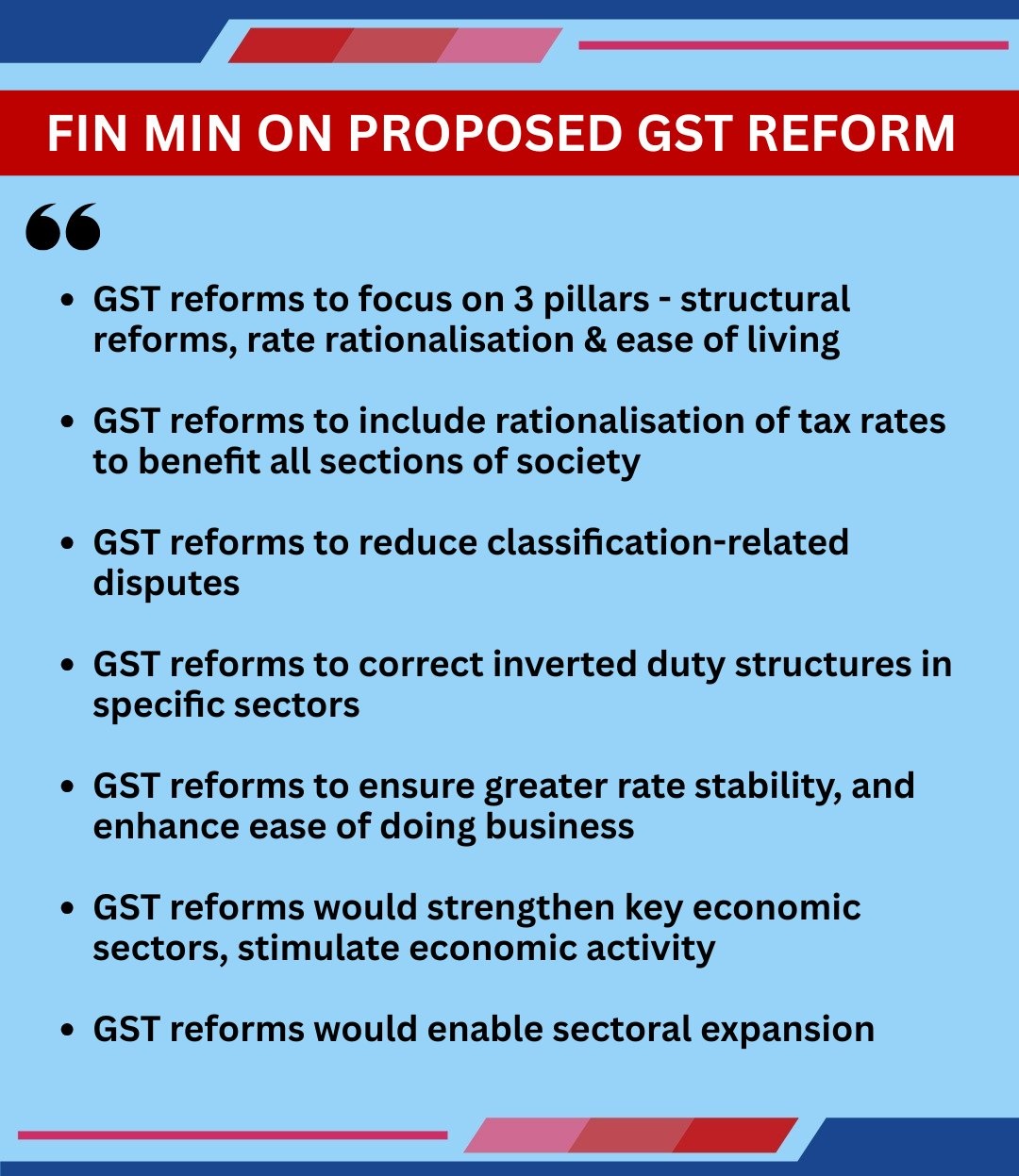
The Press Information Bureau hailed it as a Diwali gift for taxpayers, while Vajiram & Ravi summarized the reforms as a turning point for MSMEs and compliance ease.
Conclusion
Prime Minister Modi’s next-generation GST reforms signal a historic shift in India’s tax system. By simplifying rates, fixing duty issues, and providing clarity, the reforms will make taxation easier, fairer, and more predictable.
With rollout planned for Diwali 2025, taxpayers can look forward to lower costs, while MSMEs gain smoother compliance and better growth opportunities.
These reforms could be the foundation for India’s next phase of economic expansion—a simpler tax system for a stronger future.