
News Feed
Why is Stock Market Down Today? BSE Sensex Crashes Over 1,000 Points; Nifty50 Below 23,950


The stock market is down today, hitting investors with a sharp drop. The BSE Sensex has crashed by more than 1,000 points. At the same time, the Nifty50 has slipped below 23,950. This sudden fall has raised questions among investors, stock buyers, and students trying to understand the market trends. Several global and domestic factors have combined to push the market lower.
Table of Contents

An infographic illustrating the basic concept of the stock market and how it functions.
What Is Causing the Stock Market to Fall Today?
Global Market Trouble
A key reason for the stock market falling today is the trouble in global markets. The United States has imposed new tariffs on many imported goods. These higher tariffs raise worries about a growing trade war. Such fears lead to unstable markets worldwide. Emerging markets, like India, are not safe from this impact. Investors around the world are worried about slower economic growth and political tension. This has caused many to sell stocks and reduce risk. The ongoing trade disputes show that the global economy is still fragile. Investors are cautious and are cutting down on stocks, especially in sectors that depend on trade.
U.S. Tariffs and the Impact on Indian Stocks
The U.S tariffs have a direct effect on India. Indian exports now face a steep tariff of about 26%. For China, the tariff is even higher at 34%. These extra costs reduce the profit potential for Indian exporters. As a result, companies that sell goods abroad face setbacks, leading to negative feelings in the stock market. Higher tariffs hurt India’s trade balance. They also raise concerns about how long the trade conflict might last. This uncertainty hurts investor confidence and adds pressure on the stock market today.

Historical perspective on stock market crashes shows how unpredictable and impactful these events can be. For a visual explanation of the situation specifically in India, you may find this video helpful:
Watch: Why is Stock Market Crashing in India | Explainer
This video explains why the Indian stock market is experiencing downturns, highlighting factors like continuous foreign funds withdrawal and declines in key sectors like banking, metals, auto, and IT.
Why Are Small and Midcap Stocks Falling More?
In India’s market, the drop is broad but small and midcap stocks have taken the hardest hit. These stocks usually change prices more sharply and react quickly to bad news. Many of these companies depend on exports, so the new tariffs and global slowdown hit them hard. The fall in small and midcap stocks pulls the whole market down. It pushes the Sensex down by over 1,000 points and drives the Nifty50 below the 23,950 mark. This level is important because it is seen as a key support for the market.

Despite recent volatility, some indicators suggest the stock market remains fundamentally strong over the long term.
How Social Media Is Shaping Market Sentiment
On Twitter, LinkedIn, and other platforms, people are discussing the reasons behind the market drop. Many market experts share their views on the trade war and its effects on stock prices. The talk often focuses on the uncertain future due to ongoing global tensions. Investors are warned that market swings might continue for a while. While today’s fall is linked to current news, some believe it could mean a longer phase of lower confidence and slower market gains.
Expert Views and What YouTube Analysts Say
YouTube channels focused on finance have more viewers these days. Investors look for tips on how to handle the falling market. Experts say that market drops are a normal part of the investment cycle. They suggest:
- Holding a mix of investments to reduce risk
- Choosing companies with strong business models and growth chances
- Avoiding risky small and midcap stocks affected by tariffs
- Investing in mutual funds or index funds for steady, long-term returns
If you’re seeking a detailed analysis of why the market fell sharply today, this video provides clear insights:
Watch: Why Did the Stock Market Fall Today? | Faye D’Souza Explains
The video discusses the reasons behind a sharp dip in the Indian stock market, including profit booking, global trade uncertainty, and sector-specific declines.
What Should Investors Do Now?
Here are some clear steps for investors facing market dips:
- Stay updated: Watch news about global trade and tariffs. These will influence market moves.
- Don’t panic: Avoid quick selling in reaction to market falls. It can lead to losses.
- Think long term: Use the dip to find good buying options if you are prepared to wait.
- Seek advice: A financial advisor can guide your choices based on your risk level and goals.

Stock market data on digital displays illustrates the complex daily fluctuations affecting investor decisions.
Wrap Up
The sharp fall in the BSE Sensex and Nifty50 today shows how nervous the markets are. Trade tensions triggered by new U.S. tariffs have increased doubts among investors. These doubts hit stocks hard, especially exporters and smaller companies. While the current market drop is worrying, it is also a reminder to stay calm and keep a balanced view. Investors should focus on diversification and strong companies. By keeping an eye on global trade updates and avoiding panic, investors can protect their investments and look for future growth. Understanding why the stock market is down today helps investors and students alike make sensible choices. Staying informed and patient is the key to navigating through times like these.
For live updates on the market, you can also follow real-time reporting here:


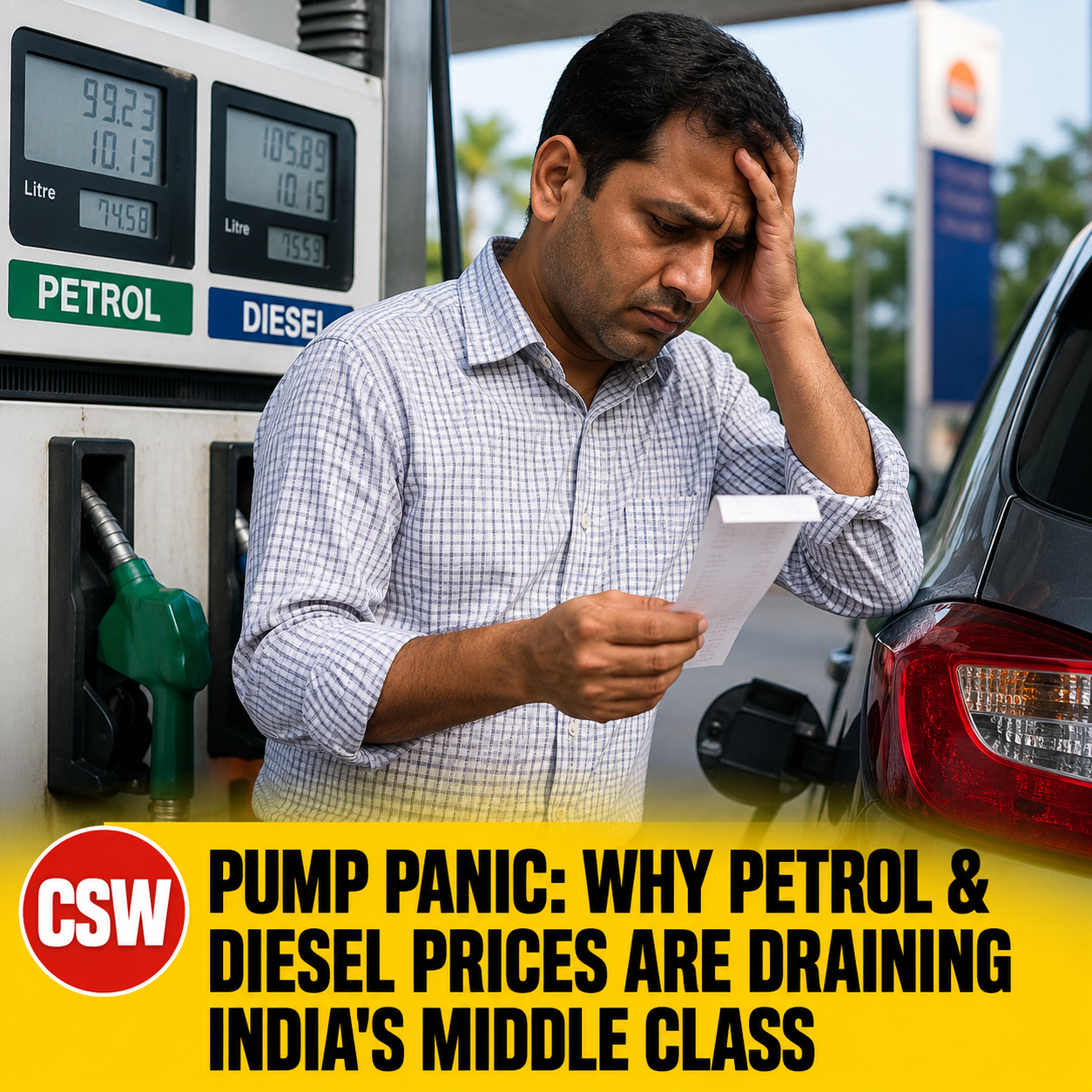
Rising crude prices, a weakening rupee, and sky-high taxes — how India’s fuel burden became an economic crisis hiding in plain sight.
An Indian Oil petrol pump — the daily stop that millions of Indians dread checking. | Photo: Wikimedia Commons
Every time Ramesh Kumar pulls up to a petrol pump in Delhi, he does the same calculation in his head — how much fuel he can afford this week without skipping his daughter’s tuition fees. He’s not alone. Millions of middle-class Indians are doing the same mental math at fuel stations across the country.
Table of Contents
Introduction: The Price That Changes Everything
Petrol and diesel prices in India have become one of the most talked-about kitchen-table issues of the decade. With petrol hovering around ₹94–106 per litre across major cities and diesel not far behind, the fuel price crisis in India is no longer just an economic headline — it is a daily lived reality for India’s vast middle class.
Whether you commute on a two-wheeler in Chennai, run a small delivery business in Pune, or manage a household budget in Lucknow, rising fuel costs touch every corner of your financial life. This blog post breaks down why petrol and diesel prices keep rising in India, how it specifically hurts the middle class, and what you can realistically expect going forward.
Why Are Petrol & Diesel Prices So High in India?
Understanding the root causes of India’s fuel price crisis requires looking at both global factors and domestic policy decisions.
1. India’s Dependence on Crude Oil Imports
India imports approximately 85% of its crude oil requirements — making it one of the most import-dependent major economies in the world. According to the Petroleum Planning and Analysis Cell (PPAC), this figure has remained stubbornly high despite domestic exploration efforts. Every time global crude oil prices rise — driven by OPEC+ supply cuts, geopolitical tensions in the Middle East, or demand surges from China — India feels the pinch almost immediately.
When Brent crude trades above $80 per barrel, Indian state-owned refiners like Indian Oil, HPCL, and BPCL absorb enormous costs that eventually get passed on to the consumer.

India’s oil import dependence makes it highly vulnerable to global crude price swings. | Photo: Unsplash
2. The Rupee–Dollar Exchange Rate Problem
Since crude oil is priced in US dollars, the INR/USD exchange rate plays a massive role in what Indians pay at the pump. As the rupee weakens against the dollar — a trend well-documented by the Reserve Bank of India (RBI) — the cost of importing oil rises automatically, even if the international price of crude stays flat. A rupee trading at ₹84–86 to the dollar means Indian oil companies pay significantly more per barrel than when the rupee was at ₹65–70.
3. Taxes: The Hidden Culprit Petrol & Diesel
Here is the uncomfortable truth: taxes account for nearly 50–55% of the final petrol price in India. Both the Central Government (through excise duty) and State Governments (through VAT) levy heavy taxes on fuel. This is a major revenue source — which is also why reducing fuel prices is a politically and fiscally difficult decision.
⚠ Did You Know?
When global crude prices fell sharply in 2020, the Indian government raised excise duty on petrol by ₹13/litre and on diesel by ₹16/litre — pocketing the benefit rather than passing it to consumers. Source: Union Budget documents.
4. Controlled Pricing by State-Owned Refiners Petrol & Diesel
India’s fuel pricing is theoretically market-linked, but in practice, oil marketing companies (OMCs) often delay price revisions — especially before elections. This creates sudden, large hikes that shock consumers who had been insulated from gradual changes.
How the Fuel Crisis Is Hurting India’s Middle Class
The middle class — broadly defined as households earning ₹25,000–₹1,00,000 per month — is caught in a particularly painful squeeze.
Millions of middle-class Indian families depend on two-wheelers as their primary mode of transport — making them uniquely vulnerable to petrol price hikes. | Photo: Unsplash
Commuting Costs Have Exploded Petrol & Diesel
India’s middle class is largely dependent on personal vehicles: motorcycles, scooters, and small cars. With fuel prices where they are today, a person commuting 40 km daily now spends ₹3,000–₹5,000 per month just on petrol — leaving less for EMIs, education, healthcare, and savings. According to a CMIE household survey, transportation expenses have become the third-largest household expenditure item for urban Indians.
Inflation Cascades Through the Entire Economy Petrol & Diesel
Diesel is the backbone of India’s logistics and transportation sector. When diesel prices rise, the cost of transporting goods — vegetables, groceries, medicines, raw materials — rises too. This fuel-driven inflation hits the middle class on both ends: travel costs go up, and so do prices at the market. The Ministry of Statistics (MOSPI) data consistently shows a strong correlation between diesel prices and the Consumer Price Index (CPI).

Rising diesel costs trickle down to everyday items — from vegetables to medicines — making inflation a compounding burden. | Photo: Unsplash
Small Business Owners Are Squeezed the Hardest
Auto-rickshaw drivers, cab operators, delivery agents, small fleet owners, and farmers who run tractors or irrigation pumps are among the hardest hit. For these micro-entrepreneurs — the backbone of India’s informal economy — fuel is an operating cost, not a lifestyle choice. When it rises, margins collapse and incomes shrink. The Federation of Indian Chambers of Commerce & Industry (FICCI) has repeatedly flagged fuel costs as a top concern for small businesses.
Savings and Investments Take a Hit
When more income goes toward fuel, middle-class families reduce contributions to SIPs, insurance premiums, and emergency funds. According to AMFI data, growth in retail SIP contributions has slowed in cities with the highest fuel costs — suggesting a direct link between pump prices and household financial planning.
What Has the Government Done Petrol & Diesel ?
The government has taken some steps to address fuel price pressures:
- Excise duty cuts in 2022 provided temporary relief of ₹8–10/litre on petrol and ₹6/litre on diesel. (PIB announcement)
- PM Ujjwala Yojana has subsidized LPG for low-income households, though the middle class sees little direct benefit.
- Ethanol blending — India is targeting 20% ethanol blending in petrol by 2025–26 as a long-term strategy to reduce crude dependency. (Ministry of New & Renewable Energy)
- GST inclusion for petroleum products remains a pending reform that economists widely support as the most effective path to rational, lower fuel taxation.
📝 Expert View
“Bringing petrol and diesel under GST would be a game-changer — it would eliminate the cascading effect of excise and VAT, and potentially reduce prices by ₹15–25 per litre.” — National Institute of Public Finance and Policy (NIPFP)
Is There Any Relief on the Horizon Petrol & Diesel ?
The short answer: cautiously, yes — but not immediately. Several factors could ease fuel prices over the medium term:
- A strengthening rupee would reduce import costs significantly without any policy change.
- A sustained drop in global crude prices — possible if demand cools or OPEC+ increases output.
- India’s growing electric vehicle (EV) ecosystem, with brands like Ola Electric, TVS, and Hero Electric gaining rapid ground in the two-wheeler segment.
- Increased domestic oil production from Rajasthan fields and the Krishna-Godavari basin over the long term.News
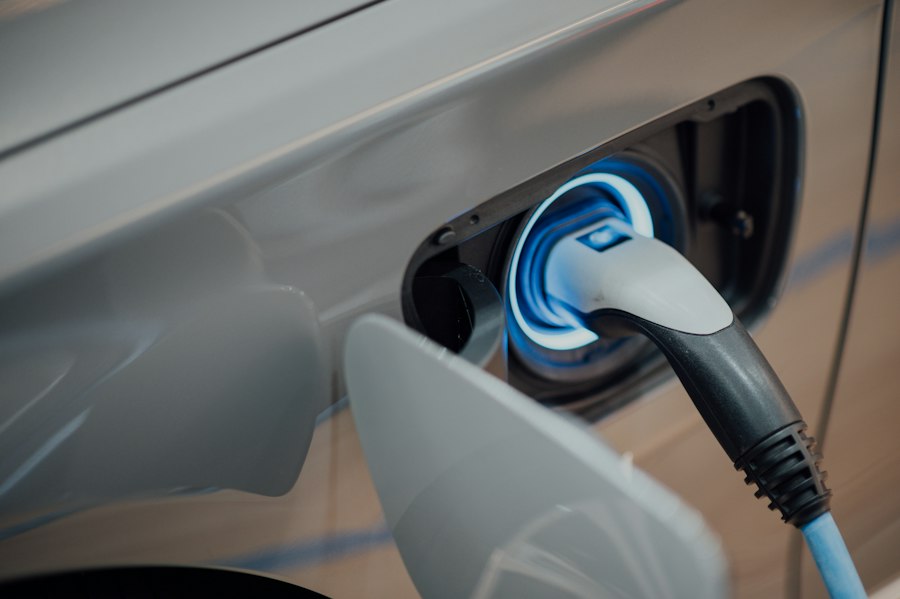
Electric two-wheelers are increasingly seen as India’s escape route from the petrol price trap — and adoption is accelerating fast. | Photo: Unsplash
What Can You Do Right Now?
While waiting for policy changes, here are practical steps to manage rising fuel costs:
- 1Use public transport or carpool — Metro networks in Delhi, Mumbai, and Bengaluru are expanding rapidly. Check Delhi Metro or your city’s transit app for routes.Petrol & Diesel
- 2Maintain your vehicle — proper tyre pressure, clean air filters, and timely servicing can improve fuel efficiency by 10–15%.
- 3Switch to CNG if your city has infrastructure — Indraprastha Gas Limited (IGL) data shows CNG costs roughly 60% less per km than petrol.
- 4Plan trips efficiently — combining errands into single trips and using Google Maps to avoid traffic can meaningfully reduce fuel consumption.
- 5Explore EV options — the total cost of ownership of electric two-wheelers is now often lower than petrol vehicles over a 3–5 year period. Compare on EVDekho.Petrol & Diesel
The Middle Class Can’t Keep Absorbing This
India’s petrol and diesel crisis is not just an energy problem — it is an economic justice issue. The middle class, which aspires to save, invest, and build a better future, is being squeezed from all sides by fuel prices it has no control over. Structural reforms, smarter taxation, accelerated EV adoption, and genuine energy diversification are the only lasting solutions. Until then, millions of Indians will keep doing the maths at the pump — hoping the numbers work out this week.Petrol & Diesel
petrol price Indiadiesel price hikefuel crisis Indiamiddle class Indiacrude oil importfuel inflationEV Indiapetrol tax IndiaOPEC IndiaGST petroleum
Found this article helpful? Share it with someone who needs to understand India’s fuel crisis.𝕏 Share on X🔆 WhatsApp💼 LinkedIn
🔥 Introduction
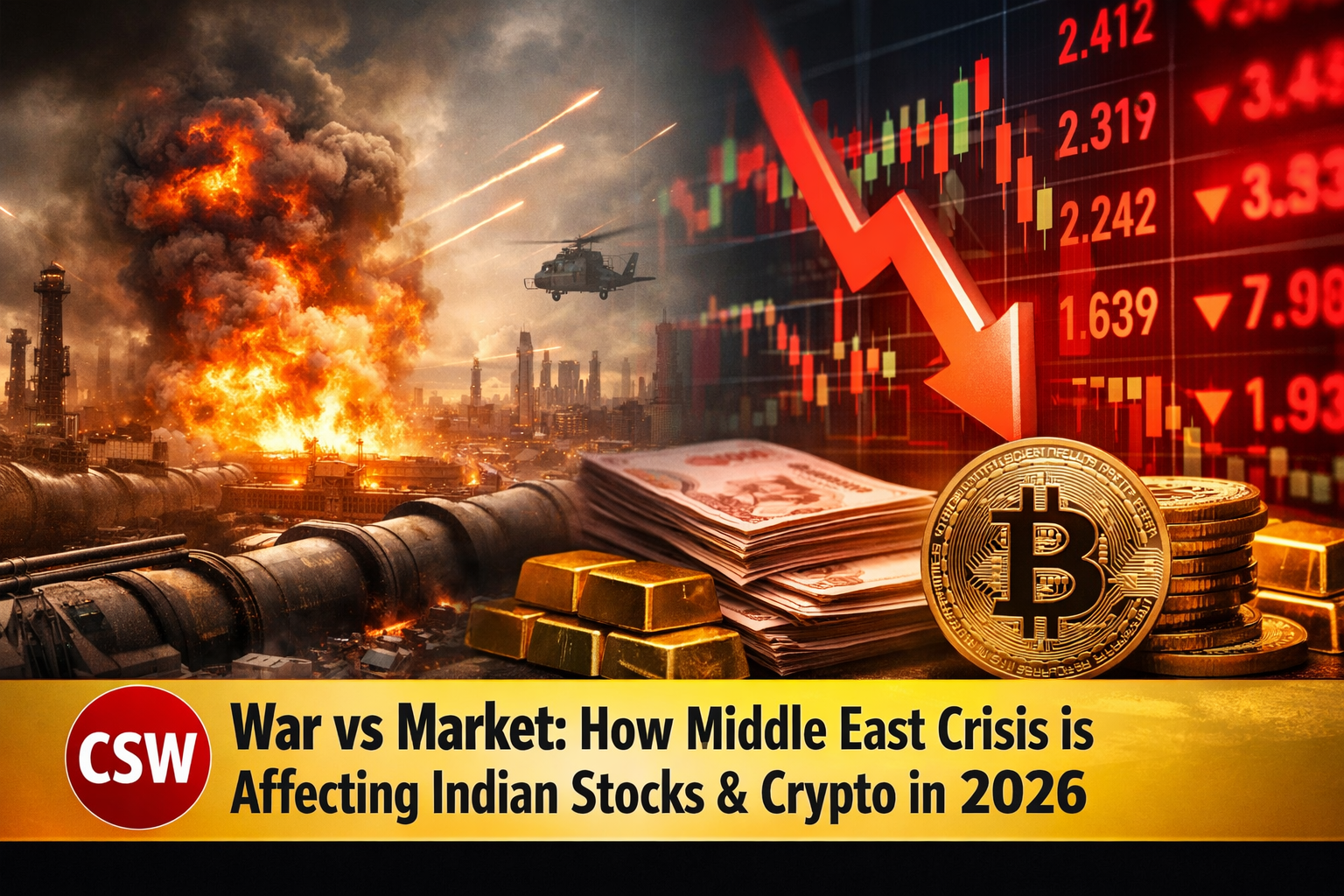
War vs Market : Global markets are once again under pressure as geopolitical tensions rise in the Middle East in 2026. Conflicts involving major powers like the US, Iran, and Israel are not just political events—they have a direct and powerful impact on financial markets worldwide.
From rising crude oil prices to volatile stock markets and surging interest in cryptocurrencies, investors are witnessing a familiar pattern: war creates uncertainty, and uncertainty drives market movement.
In this blog, we will break down how the Middle East crisis is affecting Indian stocks, crypto markets, and where smart investors can find opportunities during this turbulence.
Table of Contents
🌍 What’s Happening in the Middle East?
The Middle East remains one of the most sensitive geopolitical regions in the world. In 2026, rising tensions between major nations have created fears of supply disruptions, military escalation, and global instability.

One of the most critical factors is the Strait of Hormuz, a narrow passage through which nearly 20% of the world’s oil supply passes. Any disruption here can shake the entire global economy.
For countries like India, which rely heavily on oil imports, this situation becomes even more crucial.
🛢️ Impact on Crude Oil Prices
Whenever war tensions rise in oil-rich regions, crude oil prices tend to spike. This happens because:
- Supply chains are disrupted
- Production becomes uncertain
- Transportation risks increase
For India, higher oil prices mean:
- Increased import bills
- Rising inflation
- Pressure on the Indian rupee
As fuel prices rise, it creates a ripple effect across industries, ultimately impacting both businesses and consumers.
📉 Impact on Indian Stock Market
a) Negative Impact Sectors
Certain sectors are hit hardest during geopolitical crises:
- Aviation: Fuel costs increase significantly
- FMCG & Paints: Raw material prices rise
- Logistics & Transport: Operational costs surge
These sectors often see declining stock prices during such periods.
b) Positive Impact Sectors
Interestingly, some sectors benefit from crisis situations:
- Oil & Gas Companies: Higher crude prices boost revenues
- Defense Stocks: Increased military spending
- Renewable Energy: Shift toward energy independence
Investors often rotate their money into these sectors during uncertain times.
c) Market Behavior
During war-like situations, the Indian stock market typically shows:
- High volatility in indices like Nifty and Sensex
- Selling pressure from foreign institutional investors (FIIs)
- Panic-driven short-term corrections
However, these corrections often create long-term buying opportunities.
🪙 Impact on Cryptocurrency Market War vs Market
Cryptocurrencies have emerged as a modern alternative asset during global crises.
During the 2026 Middle East tensions, crypto markets are showing mixed reactions:
- Bitcoin is being seen as “digital gold”
- Increased demand from investors seeking decentralization
- Higher volatility in altcoins
Unlike traditional markets, crypto operates 24/7 and is not controlled by governments, making it attractive during geopolitical instability.
🥇 Gold vs Bitcoin: Safe Haven Battle War vs Market
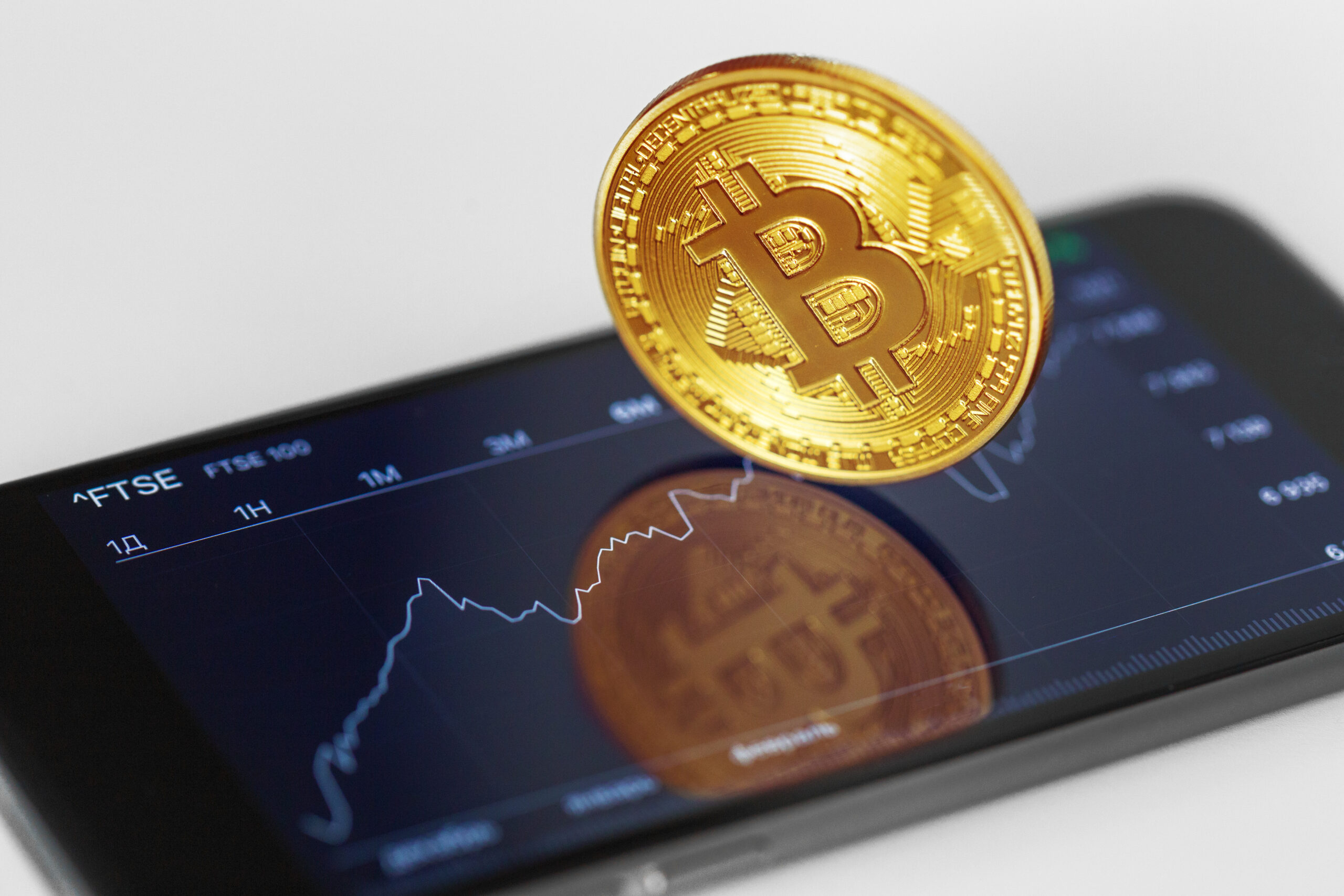
In times of crisis, investors traditionally turn to gold. However, in recent years, Bitcoin has entered the competition as a digital safe haven.
Gold
- Stable and time-tested
- Less volatile
- Preferred by conservative investors
Bitcoin
- High growth potential
- More volatile
- Preferred by younger and tech-savvy investors
In 2026, both assets are gaining attention, showing that diversification is becoming key for investors.
📊 Historical Examples
History shows a clear pattern when it comes to war and markets:
- Russia–Ukraine War (2022):
- Oil prices surged
- Stock markets corrected
- Crypto initially fell, then recovered
- Gulf War (1990s):
- Massive spike in oil prices
- Global economic slowdown
These examples highlight one important lesson:
👉 Every crisis brings volatility—but also opportunity.
🇮🇳 What It Means for Indian Investors War vs Market
For Indian investors, the current situation requires a balanced and strategic approach.
Short-Term Strategy
- Avoid panic selling
- Stay cautious with high-risk stocks
- Focus on defensive sectors
Long-Term Strategy
- Invest in fundamentally strong companies
- Use market dips as buying opportunities
- Diversify across assets (stocks, gold, crypto)
🚀 Opportunities in Crisis War vs Market
Smart investors know that market downturns are the best time to build wealth.
Here are some opportunities to watch:
- Undervalued blue-chip stocks
- Energy and defense sectors
- Long-term crypto investments (especially Bitcoin)
Timing the market perfectly is difficult, but disciplined investing during fear-driven markets often delivers strong returns. Click Here
⚠️ Risks to Watch
While opportunities exist, risks should not be ignored:War vs Market
- Rising inflation
- Interest rate hikes
- Global recession fears
- Currency depreciation
Investors should always maintain proper risk management and avoid overexposure.
🔮 Future Outlook (2026)
The future of markets largely depends on how the situation unfolds:War vs Market
- If tensions escalate:
- Markets may see deeper corrections
- Oil prices could rise further
- If tensions ease:
- Strong recovery rally possible
- Investor confidence will return
For crypto, the long-term outlook remains bullish due to increasing adoption and institutional interest.
🧠 Conclusion
The Middle East crisis of 2026 is a reminder that global events and financial markets are deeply interconnected. While wars create fear and uncertainty, they also open doors for smart investment opportunities.
The key is to stay informed, avoid emotional decisions, and focus on long-term goals.
👉 Remember: Markets may fluctuate in the short term, but disciplined investors always win in the long run.
🔗 For More Insights
Stay updated with the latest stock and crypto trends on:
👉 www.cryptostockwaves.com
🌍 Global Economy & War Impact
- World Bank (India growth, global economy)
👉 https://www.worldbank.org/en/country/india - IMF Global Outlook
👉 https://www.imf.org/en/Publications/WEO
What is inside the newly discussed Epstein file, and why are people linking it to Donald Trump? A fact-based, deep analysis of documents, allegations, and what they really mean for Trump’s legacy.
Table of Contents
The File Everyone Is Talking About
For years the Jeffrey Epstein file case has hovered over American politics like a storm that refuses to fade. From Wall Street elites to Hollywood figures, many powerful names appeared in Epstein’s orbit. But one question continues to dominate headlines: does any Epstein file truly connect Donald Trump to wrongdoing?

Recent releases of court documents and flight logs have reignited debate. Social media exploded with claims that “1 explosive Epstein file” could permanently damage Trump’s legacy. Yet between viral posts and verified facts lies a complicated story.
To understand the truth, we must separate documented evidence from online speculation.
Official court document archive:
https://www.courtlistener.com
Department of Justice Epstein case overview:
https://www.justice.gov
Trump and Epstein file: What Is Actually Proven?
Donald Trump and Jeffrey Epstein moved in similar New York social circles during the 1990s and early 2000s. Photographs show them at the same events, and Trump once described Epstein as a “terrific guy” in a 2002 magazine quote.
However, public records also show that Trump later distanced himself from Epstein. In 2009, Trump’s legal team stated that he had banned Epstein from Mar-a-Lago after a dispute—years before Epstein’s 2019 arrest.

No criminal charge or civil judgment has ever established that Trump participated in Epstein’s crimes. This distinction is crucial for any honest analysis.
What Is in the “Explosive” Epstein file?
The document most often cited online is part of the Epstein civil case unsealing in New York. These files include:
- Testimonies from former Epstein associates
- Flight log records
- Emails and scheduling notes
- Allegations made by accusers
The presence of a name in these papers does not equal guilt. Many individuals appear simply because investigators tracked everyone who ever interacted with Epstein.
Suggested image:
Alt text: Diagram showing how court documents are categorized (testimony, logs, emails).
Source: Wikimedia Commons – public domain legal illustration.
Why the Internet Calls It “Legacy-Shaking”
Three reasons fuel the viral narrative:
- Election Timing – Any Epstein headline becomes political ammunition.
- Public Distrust – Years of secrecy created suspicion around every powerful figure.
- Media Incentives – Sensational headlines drive clicks.
Search trends show spikes every time a new batch of files is mentioned.
Google Trends transparency tool: https://trends.google.com
But experts warn that clicks are not convictions.
Voices From Investigators and Journalists
Major investigations by outlets such as the Miami Herald and The New York Times uncovered how Epstein operated for decades. None of these investigations concluded that Trump was involved in Epstein’s trafficking network.
Miami Herald Epstein investigation:
https://www.miamiherald.com
Legal analysts emphasize:
- Being listed in a document ≠ criminal involvement
- Allegations require corroborating evidence
- Civil case files often contain untested claims
The Political Fallout
Even without charges, the association has become a reputational battlefield.
Supporters argue:
- Trump cooperated with early investigators
- He cut ties with Epstein long before the arrest
- No accuser has named him in a criminal complaint
Critics counter:
- Social proximity deserves scrutiny
- The public deserves full transparency
- All documents should be released unredacted
This clash keeps the story alive regardless of legal outcomes.
Suggested image:
Alt text: Newspaper headlines collage about Epstein case.
Source: Unsplash editorial collection.
How to Read These Files Without Being Manipulated
If you encounter viral claims, follow this checklist:
- Is it a primary document or a screenshot?
- Does it show an allegation or a proven fact?
- Which media outlet verified it?
- Are dates clearly mentioned?
Disinformation thrives when readers skip these steps.
Fact-checking resources:
https://www.snopes.com
https://www.factcheck.org
Could Any File Truly Change History?
For Trump’s legacy to be legally “shaken,” one of three things would need to happen:
- A direct accusation under oath
- Corroborated evidence of criminal conduct
- Financial or travel records proving involvement
So far, none of these thresholds have been met in publicly available material.
The Bigger Picture
The Epstein tragedy is larger than any single politician. It exposed failures of:
- Federal prosecution systems
- Elite accountability
- Media transparency
Reducing it to partisan headlines risks ignoring the real victims.
Final Verdict: Sensation vs. Substance
The phrase “1 Explosive Epstein File That Could Shake Trump’s Legacy Forever” reflects public anxiety more than legal reality. Documents continue to emerge, but responsible readers must distinguish between:
- Association
- Allegation
- Evidence
- Conviction
Until verified proof appears, the story remains a lesson in how modern politics turns documents into digital firestorms.
FAQ
Did any Epstein accuser name Trump?
No verified court testimony has accused Trump of participating in Epstein’s crimes.
Was Trump on Epstein’s private jet?
Flight logs show many names; reports about Trump remain disputed and unproven.
Are more files coming?
Courts periodically release material—follow official sources above.