
News Feed
India Proposes Slashing Taxes on Small Cars under Modi Reforms, Sending Shares Higher 2025

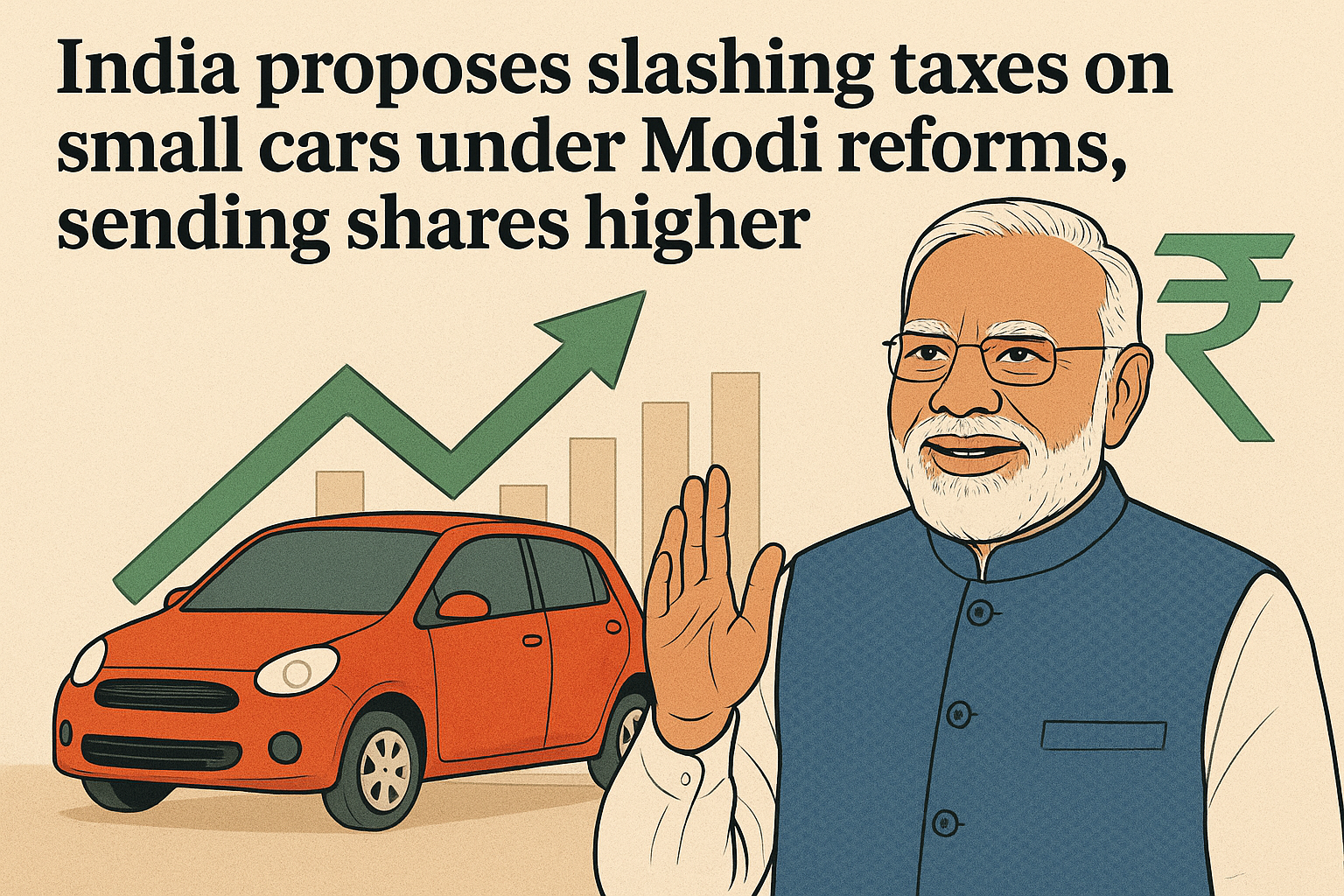
Big Tax Cuts on Small Cars to Make Vehicles Affordable
The Indian government under Prime Minister Narendra Modi has announced a major move to cut taxes on small cars. The GST rate on small petrol and diesel cars will fall from 28% to 18%. This is the largest drop in automotive taxes since 2017. This tax cut aims to bring the cost of small cars down for many buyers. It will make owning a car easier for middle-class families. This should also increase demand and help the auto industry grow. Car makers like Maruti Suzuki, who lead the small car market in India, stand to gain the most. Lower taxes mean lower prices, which could boost sales significantly.

Progressive taxation and lowering taxes on essential goods can positively impact consumer affordability and industry growth.
Table of Contents
What Modi’s GST Reform Means for Small Cars
Lower GST on Small Cars
Small cars usually fall into a tax bracket with high GST, adding a big chunk to the price. Cutting the GST from 28% to 18% will:
- Reduce the price tag for entry-level cars.
- Encourage more buyers to choose small cars.
- Push manufacturers to make and sell more vehicles.
This change should lighten the initial payment burden for buyers, making cars more affordable and accessible. For a deeper understanding of how tax structures affect consumer behavior and market dynamics, consider this insightful news analysis from NDTV:
GST Reforms 2025: What A Tax Cut On Vehicles Means For India’s Auto Industry
An in-depth look at how reducing GST on small cars and two-wheelers could revive demand and drive improvements in vehicle standards.
Cuts in Insurance Premium Taxes
The reform package also cuts GST on insurance premiums. Health and life insurance currently have 18% GST. The government plans to lower it to as low as 5%, or sometimes zero. This will:
- Lower the cost of insurance products.
- Help more people buy insurance.
- Offer better financial protection to families.
This move aims to expand insurance coverage by making policies more affordable and accessible.
Simpler GST Rate Structure
To make taxes easier, the government will simplify GST slabs:
- Introduce a new highest tax slab of 40% for luxury items like high-end cars and tobacco.
- Reduce GST on essentials like daily goods, air conditioners, and TVs.
- Remove some complexity to reduce the tax burden and make compliance easier.NEWS
This streamlined structure can benefit consumers and businesses by making prices clearer and reducing paperwork. For an overview of these complex tax systems and how reforms simplify consumer costs, this explanatory article provides clarity:
Explained | India’s complex GST tax and how Modi’s reform will make goods cheaper
A breakdown of India’s GST slabs, the planned simplifications, and how these changes aim to lower prices on goods including vehicles.

Taxes come in various forms and significantly influence goods pricing and consumer behavior.
Market Reacts Positively to Tax Cuts
After the tax cuts were announced, the stock markets reacted positively. Shares of auto companies jumped as investors saw chances for higher sales and profits. This shows how much investors believe the tax cuts will boost car buying. Experts say lower taxes on small cars will:
- Increase buying by making cars cheaper.
- Help related sectors, like car loans and insurance.
- Stimulate the economy by encouraging spending.
A detailed report from Business Standard highlights the timing and expected economic stimulus from these reforms:
PM’s Diwali Dhamaka may come as GST cuts on small cars …
This article reports on the Indian government’s proposal to cut GST rates ahead of Diwali to ease consumer burden and support micro, small, and medium enterprises.
How These Changes Affect the Auto Industry and Buyers
There is more to these tax cuts than just price drops. They will impact the whole economy:
- Auto makers: Expect higher sales and bigger production plans. Companies like Hyundai, Tata Motors, and Maruti Suzuki benefit.
- Consumers: More affordable cars mean more people can own personal vehicles, improving their freedom and lifestyle.
- Economy: As car sales rise, jobs in parts production, logistics, and services will grow too.
This boost could spark growth across many sectors tied to car making and use. To visualize how different taxes impact goods and services, including vehicles, the following infographic provides clarity on tax categories:

Understanding categories of taxes that influence pricing and demand.
Views from Social Media and Experts
The tax cuts sparked a buzz on social media platforms and YouTube finance channels. Experts have called the reforms smart, pointing out that:
- These cuts come at the right time when the economy needs a lift.
- Lower taxes make necessary goods and aspirational products easier to buy.
- Auto and insurance firms are likely to see steady growth in sales.
People are hopeful the reforms will keep driving India’s economic progress. To get an animated insight on how income taxes function and affect purchasing power, here’s a helpful explainer video:
How Income Taxes Work – Watch Video
A visual breakdown of income tax principles and their impact on consumer finances.
What This Means for India’s Growth
The tax cuts on small cars and insurance are part of a bigger plan to grow the economy. By lowering GST from 28% to 18% on small cars, the government wants to:
- Help more people buy cars.
- Boost spending in important industries.
- Encourage job creation in manufacturing and services.
- Make insurance more affordable so more can protect themselves financially.
Already, markets show signs of optimism, proving how important tax policies are for economic health. For an overall perspective on taxation’s role in economic policy, consider this comprehensive infographic:

Understanding taxation fundamentals helps grasp the broader impact on economy and consumers.

What is inside the newly discussed Epstein file, and why are people linking it to Donald Trump? A fact-based, deep analysis of documents, allegations, and what they really mean for Trump’s legacy.
Table of Contents
The File Everyone Is Talking About
For years the Jeffrey Epstein file case has hovered over American politics like a storm that refuses to fade. From Wall Street elites to Hollywood figures, many powerful names appeared in Epstein’s orbit. But one question continues to dominate headlines: does any Epstein file truly connect Donald Trump to wrongdoing?

Recent releases of court documents and flight logs have reignited debate. Social media exploded with claims that “1 explosive Epstein file” could permanently damage Trump’s legacy. Yet between viral posts and verified facts lies a complicated story.
To understand the truth, we must separate documented evidence from online speculation.
Official court document archive:
https://www.courtlistener.com
Department of Justice Epstein case overview:
https://www.justice.gov
Trump and Epstein file: What Is Actually Proven?
Donald Trump and Jeffrey Epstein moved in similar New York social circles during the 1990s and early 2000s. Photographs show them at the same events, and Trump once described Epstein as a “terrific guy” in a 2002 magazine quote.
However, public records also show that Trump later distanced himself from Epstein. In 2009, Trump’s legal team stated that he had banned Epstein from Mar-a-Lago after a dispute—years before Epstein’s 2019 arrest.

No criminal charge or civil judgment has ever established that Trump participated in Epstein’s crimes. This distinction is crucial for any honest analysis.
What Is in the “Explosive” Epstein file?
The document most often cited online is part of the Epstein civil case unsealing in New York. These files include:
- Testimonies from former Epstein associates
- Flight log records
- Emails and scheduling notes
- Allegations made by accusers
The presence of a name in these papers does not equal guilt. Many individuals appear simply because investigators tracked everyone who ever interacted with Epstein.
Suggested image:
Alt text: Diagram showing how court documents are categorized (testimony, logs, emails).
Source: Wikimedia Commons – public domain legal illustration.
Why the Internet Calls It “Legacy-Shaking”
Three reasons fuel the viral narrative:
- Election Timing – Any Epstein headline becomes political ammunition.
- Public Distrust – Years of secrecy created suspicion around every powerful figure.
- Media Incentives – Sensational headlines drive clicks.
Search trends show spikes every time a new batch of files is mentioned.
Google Trends transparency tool: https://trends.google.com
But experts warn that clicks are not convictions.
Voices From Investigators and Journalists
Major investigations by outlets such as the Miami Herald and The New York Times uncovered how Epstein operated for decades. None of these investigations concluded that Trump was involved in Epstein’s trafficking network.
Miami Herald Epstein investigation:
https://www.miamiherald.com
Legal analysts emphasize:
- Being listed in a document ≠ criminal involvement
- Allegations require corroborating evidence
- Civil case files often contain untested claims
The Political Fallout
Even without charges, the association has become a reputational battlefield.
Supporters argue:
- Trump cooperated with early investigators
- He cut ties with Epstein long before the arrest
- No accuser has named him in a criminal complaint
Critics counter:
- Social proximity deserves scrutiny
- The public deserves full transparency
- All documents should be released unredacted
This clash keeps the story alive regardless of legal outcomes.
Suggested image:
Alt text: Newspaper headlines collage about Epstein case.
Source: Unsplash editorial collection.
How to Read These Files Without Being Manipulated
If you encounter viral claims, follow this checklist:
- Is it a primary document or a screenshot?
- Does it show an allegation or a proven fact?
- Which media outlet verified it?
- Are dates clearly mentioned?
Disinformation thrives when readers skip these steps.
Fact-checking resources:
https://www.snopes.com
https://www.factcheck.org
Could Any File Truly Change History?
For Trump’s legacy to be legally “shaken,” one of three things would need to happen:
- A direct accusation under oath
- Corroborated evidence of criminal conduct
- Financial or travel records proving involvement
So far, none of these thresholds have been met in publicly available material.
The Bigger Picture
The Epstein tragedy is larger than any single politician. It exposed failures of:
- Federal prosecution systems
- Elite accountability
- Media transparency
Reducing it to partisan headlines risks ignoring the real victims.
Final Verdict: Sensation vs. Substance
The phrase “1 Explosive Epstein File That Could Shake Trump’s Legacy Forever” reflects public anxiety more than legal reality. Documents continue to emerge, but responsible readers must distinguish between:
- Association
- Allegation
- Evidence
- Conviction
Until verified proof appears, the story remains a lesson in how modern politics turns documents into digital firestorms.
FAQ
Did any Epstein accuser name Trump?
No verified court testimony has accused Trump of participating in Epstein’s crimes.
Was Trump on Epstein’s private jet?
Flight logs show many names; reports about Trump remain disputed and unproven.
Are more files coming?
Courts periodically release material—follow official sources above.

Investors entering 2026 face a classic battle between tradition and transformation—Gold, the centuries-old store of value, and EV (Electric Vehicle) stocks, the symbol of the new energy revolution. Both assets promise growth, but they serve very different purposes in a portfolio. The big question is: Where should smart investors put their money in 2026?
In this guide, we will compare gold and EV stocks on returns, risk, global trends, and long-term potential so you can make a confident decision.
Table of Contents
📌 Why This Debate Matters in 2026:Gold vs EV Stocks
The world economy is shifting fast. Inflation fears, geopolitical tensions, and central bank policies continue to support gold. At the same time, governments are pushing aggressively toward clean energy, giving a massive boost to EV companies.
- Gold represents safety and stability
- EV stocks represent growth and innovation

Your investment choice should depend on whether you want capital protection or high growth exposure.
👉 Learn more about global gold trends:
https://www.gold.org
👉 EV market outlook by IEA:
https://www.iea.org
🥇 Gold Investment in 2026 – The Safe Haven Story
1. Inflation Hedge
Gold has historically protected investors from inflation. As money loses value, gold tends to rise. With many countries still battling high prices, gold remains a favorite defensive asset.
2. Central Bank Buying
Central banks across India, China, and Europe have been continuously increasing gold reserves. This institutional demand supports long-term prices.
3. Liquidity & Stability
Gold is one of the most liquid assets in the world. Whether through ETFs, digital gold, or physical coins, selling gold is easy during emergencies.
4. Limited Supply
Unlike stocks, gold supply cannot be increased overnight. This scarcity supports value over decades.
Ways to Invest in Gold
- Physical gold (coins/bars)
- Gold ETFs
- Sovereign Gold Bonds
- Gold mutual funds
👉 Check Sovereign Gold Bond details:
https://www.rbi.org.in
🚗 EV Stocks in 2026 – The Growth Machine
The EV industry is not just about cars. It includes:Gold vs EV Stocks
- Battery manufacturers
- Charging infrastructure
- Software & autonomous tech
- Lithium and metal miners
1. Government Support
Countries have announced deadlines to phase out petrol vehicles. India targets major EV adoption by 2030. Subsidies and tax benefits directly help EV companies grow revenue.
2. Exploding Demand
Consumers prefer lower running costs and eco-friendly transport. EV sales are growing at 25–30% annually worldwide.Gold vs EV Stocks
3. Technology Edge
Battery costs have fallen nearly 80% in the last decade. Companies investing in solid-state batteries may become the next multibaggers.
4. High Risk – High Reward
Unlike gold, EV stocks can be volatile. One bad quarter can crash prices, but the right company can give 5x–10x returns.
👉 Global EV sales statistics:Gold vs EV Stocks
https://www.statista.com
Gold vs EV Stocks – Head to Head Comparison
| Factor | Gold | EV Stocks |
|---|---|---|
| Risk Level | Low | High |
| Return Potential | Moderate | Very High |
| Volatility | Low | Extreme |
| Income | No | Possible dividends |
| Inflation Protection | Excellent | Average |
| Growth Theme | Defensive | Aggressive |
What Will Drive Gold Prices in 2026?
- US Interest Rates – Lower rates = bullish for gold
- Geopolitical tensions – Wars boost safe havens
- Rupee weakness – Gold rises in INR terms
- ETF inflows – Big money movement matters
Gold is ideal if your goal is:
- Wealth protection
- Portfolio stability
- Retirement planning
- Hedging stock market crashes
What Will Drive EV Stocks in 2026?
- Battery breakthroughs
- Lithium & copper demand
- Charging network expansion
- Profitability of EV makers
- Policy incentives
EV stocks suit investors who want:
- Aggressive growth
- 5–10 year horizon
- Ability to handle 30–40% volatility
Portfolio Strategy – Don’t Choose One, Blend Both
The smartest approach is asset allocation:
- 40% Growth – EV & green energy
- 30% Stability – Gold
- 20% Equity index
- 10% Cash
Example SIP Plan
- 5,000/month in EV mutual fund
- 3,000/month in Gold ETF
- 2,000/month in Nifty index
This balances safety with opportunity.Gold vs EV Stocks
Who Should Invest in Gold?
- Age 40+ investors
- Low risk appetite
- Need for stable returns
- Preparing for recession
Who Should Invest in EV Stocks?
- Young investors
- 7–10 year horizon
- High risk tolerance
- Looking for multibaggers
Top Risks to Remember
Gold Risks
- No regular income
- Returns may lag equity
- Storage cost (physical)
EV Stock Risks
- Competition
- Technology failure
- Valuation bubbles
- Raw material shortages
Final Verdict – Gold vs EV Stocks
- Want peace of mind? → Choose Gold
- Want wealth creation? → Choose EV stocks
- Want both? → Create a hybrid portfolio
2026 will reward investors who respect both tradition and technology. Gold will protect your downside, while EV stocks can build generational wealth.
🧠 My Personal Take
As a market observer, I believe:
“Gold will protect your wealth, EV will multiply it.”
Use gold as the foundation and EV as the growth engine.
For more insights on crypto, stocks, and commodities visit:
👉 www.cryptostockwaves.com
FAQs
1. Is gold safer than EV stocks?
Yes, gold is far safer with lower volatility.
2. Can EV stocks beat gold returns?
Absolutely, but with higher risk.
3. Best way to invest in gold?
Gold ETFs and Sovereign Gold Bonds.
4. Are EV stocks overvalued?
Some are—stock selection is critical.
Disclaimer: This article is for educational purposes only and not financial advice. Do your own research before investing.
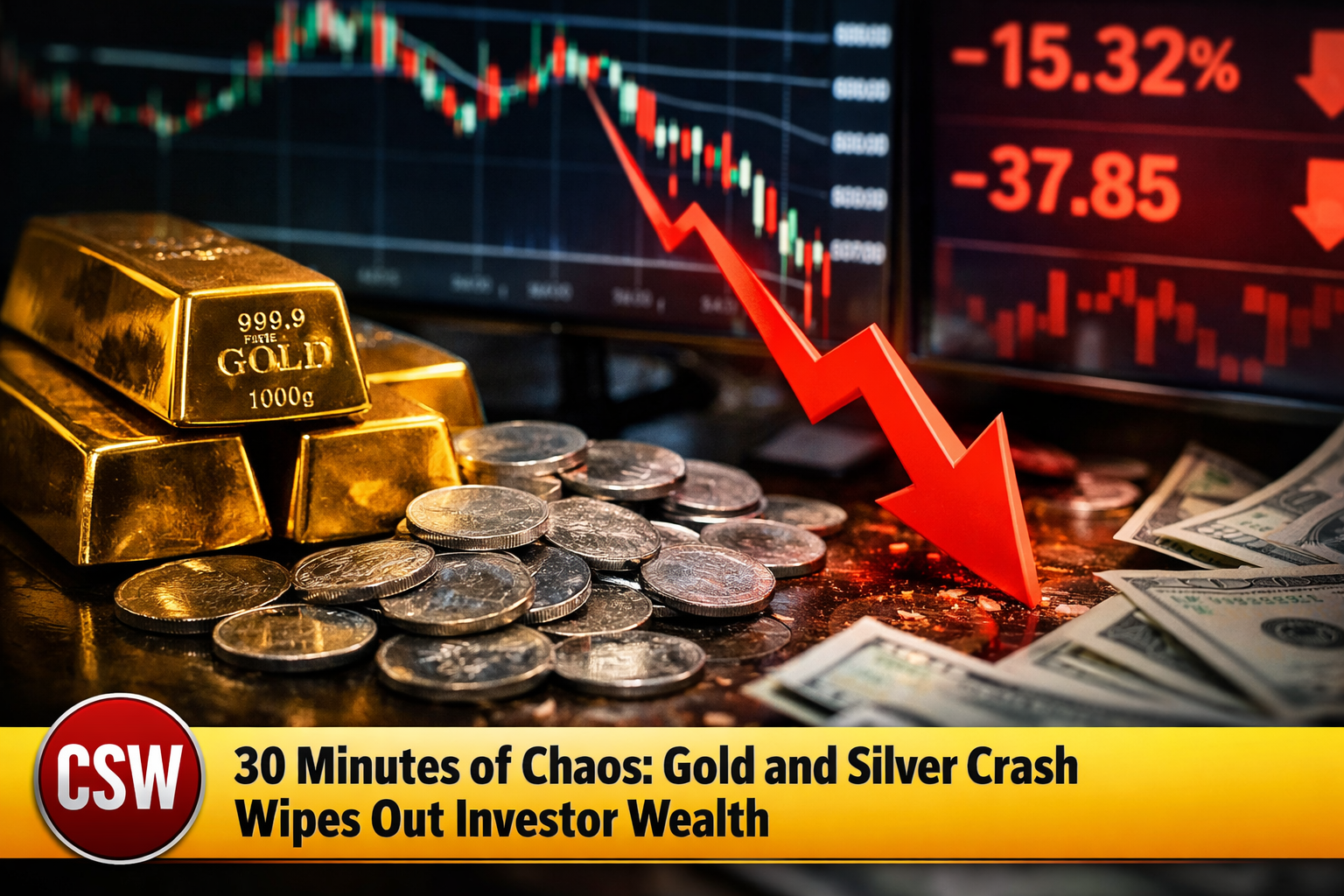
Gold and Silver Crash 30 Minutes That Shocked the Precious Metals Market
Gold and silver are traditionally seen as safe-haven assets—symbols of stability during uncertainty. But on this shocking trading day, that belief was brutally tested. In just 30 minutes, gold and silver prices crashed sharply, triggering panic selling, massive stop-loss hits, and instant losses for thousands of investors.

So what really happened in those 30 minutes of chaos?
Why did people lose money so fast?
And most importantly—what should smart investors learn from this brutal episode?
Let’s break it all down.
Table of Contents
What Exactly Happened in Those 30 Minutes Gold and Silver Crash ?
Within a half-hour window, global commodity markets witnessed:
- Sudden heavy sell orders
- Sharp breakdown of key technical support levels
- Panic among retail traders
- Algorithmic and institutional selling accelerating the fall
Gold and silver prices dropped so fast that many traders couldn’t even react in time.
👉 Live gold price reference:
🔗 https://www.investing.com/commodities/gold
🔗 https://www.investing.com/commodities/silver
Why Did Gold and Silver Crash So Suddenly?
1 Brutal Trigger: Rising Bond Yields & Dollar Strength
The biggest immediate trigger was a sudden spike in US bond yields and a stronger US Dollar Index (DXY).
- Higher bond yields = less attractive gold
- Stronger dollar = pressure on commodities priced in USD

🔗 Learn more about the Dollar Index:
https://www.investing.com/indices/usdollar
2 Shocking Factor: Over-Leverage by Retail Traders
Many traders entered gold and silver positions with:
- High leverage
- Tight stop losses
- Short-term expectations
Once prices slipped, stop-loss hunting kicked in, accelerating the fall.
3 Savage Sell-Off by Institutions Gold and Silver Crash
When key price levels broke, institutional algorithms executed large sell orders automatically. This turned a normal correction into a violent crash within minutes.
How Much Money Did People Lose?
In just 30 minutes:
- Intraday traders faced instant margin calls
- Futures traders saw accounts wiped out
- Options premiums collapsed
- Long-term investors panicked and exited at the worst prices
This wasn’t just a price drop—it was a wealth shock.
Gold vs Silver: Who Suffered More?
| Asset | Volatility | Damage |
|---|---|---|
| Gold | Moderate | Heavy losses for leveraged traders |
| Silver | Extremely High | Brutal wipeout due to higher volatility |
Silver always falls harder than gold in panic situations—and this crash proved it again.
Is This the End of the Gold & Silver Bull Market?
Short answer: NO.
This crash looks more like:
- A liquidity-driven correction
- A leverage flush-out
- A shakeout of weak hands
Historically, such crashes often reset the market before the next move.
📌 Historical reference:
https://www.worldgold.org/goldhub/data
Smart Money vs Panic Sellers
Here’s the key difference:
❌ Panic Sellers
- Sold at the bottom
- Acted emotionally
- Followed the crowd

✅ Smart Money
- Waited for confirmation
- Bought near support
- Focused on long-term fundamentals
Remember: Markets transfer money from impatient hands to patient ones.
3 Critical Lessons Every Investor Must Learn
1 Powerful Lesson: Never Over-Leverage
Leverage magnifies both profits and losses. In crashes, it only magnifies pain.
2 Emotional Control Is Everything
Markets fall fast—but emotions destroy portfolios faster.
3 Always Respect Volatility in Commodities
Gold is calm.
Silver is wild.
Trade accordingly.

What Should Investors Do Now?
✔ Avoid panic decisions
✔ Track key support levels
✔ Use staggered buying instead of lump-sum
✔ Focus on long-term trends, not 30-minute noise
👉 Track Indian gold prices here:
https://www.mcxindia.com/MarketData/CommodityDetail.aspx?Symbol=GOLD
Is This a Buying Opportunity or a Warning?
For traders:
⚠ Extreme caution—volatility remains high
For long-term investors:
✅ This could turn into a strategic accumulation zone
Timing matters more than opinions.
Final Verdict: Chaos Creates Opportunity Gold and Silver Crash
Those 30 minutes of chaos were painful—but they also revealed a timeless truth:
Market crashes don’t destroy wealth—emotional decisions do.
Gold and silver are still powerful assets, but only for those who respect risk, patience, and discipline.
Disclaimer
This article is for educational purposes only. It is not financial advice. Always consult a certified financial advisor before making investment decisions.
📌 Published by:
CryptoStockWaves
🌐 https://www.cryptostockwaves.com
-

 News Feed2 months ago
5 Smart Ways Silver ETFs Can Supercharge Your Portfolio
-

 Cryptocurrency3 months ago
Cryptocurrency Prices in India Today: Compare Bitcoin, Ethereum, Dogecoin, Litecoin & Ripple Across CoinSwitch, Coinbase, WazirX and Other Major Exchanges 2025
-

 Cryptocurrency3 months ago
Reliance Jio Tests New JioCoin Crypto on Polygon Blockchain 2025
-

 Cryptocurrency3 months ago
City of Palau’s Digital Residency 2025: New Heaven for Crypto People?
-

 News Feed3 months ago
OnePlus 15R to Come with a 32 MP Selfie Shooter and New Electric Violet Colour: Everything We Know So Far
-

 Funds2 months ago
Top 10 Silver ETFs to Buy or Avoid in Today’s Uncertain Market
-

 News Feed2 months ago
Silver Rockets 6% to Record ₹2,54,000/kg — 5 Positive Signals Suggest More Upside! Exclusive!
-

 Funds2 months ago
Top 10 Gold ETFs to Invest in Right Now for Long-Term Stability (2025 Guide)