The Nifty 200 Momentum30 Index is a powerful tool for investors who want to focus on growth by picking stocks that are trending upwards. By selecting the top 30 stocks with the highest momentum from the Nifty 200 list, this index targets high-potential investments. In this blog, we’ll break down what the Nifty 200 Momentum 30 Index is, how it works, and how you can invest in it through popular funds like the UTI Nifty 200 Momentum 30 Index Fund or the ICICI Prudential Nifty 200 Momentum30 Index Fund.
Table of contents
What is the Nifty 200 Momentum 30 Index?
The Nifty 200 Momentum 30 Index is designed to track the 30 stocks that are showing the highest momentum in the Nifty 200 group. Momentum, in this case, refers to how well the stock has been performing recently, particularly in terms of price movement. So, if a stock has been rising consistently, it’s more likely to be part of the Nifty 200 Momentum30 Index.
For investors, this index is an easy way to invest in stocks that are likely to keep growing, based on their recent performance. If you like the idea of investing in momentum-based strategies, the UTI Nifty 200 Momentum30 Index Fund or ICICI Prudential Nifty 200 Momentum30 Index Fund may suit you well.
How is the Index Made Up?
The Nifty 200 Momentum30 Index picks the top 30 stocks from the Nifty 200 based on factors like price momentum and liquidity. These 30 stocks are updated regularly, making sure the index always reflects the best-performing stocks.
If you don’t want to pick individual stocks, you can invest in funds that track this index, such as the UTI Nifty 200 Momentum30 Index Fund. These funds are a simple way to get exposure to the best 30 momentum stocks without worrying about buying and managing each one individually.
Performance and Historical Trends
The Nifty 200 Momentum30 Index has historically shown strong performance, especially during periods of market growth. It often outperforms broader indices like the Nifty 50 because it focuses on high-growth stocks. If you compare the Nifty 200 Momentum 30 with funds like the ICICI Prudential Nifty 200 Momentum30 Index Fund, you’ll see that the momentum strategy can lead to higher returns, but it also comes with more ups and downs due to the nature of momentum investing.
For example, the UTI Nifty 200 Momentum 30 Index Fund Direct Growth strives to match the returns of the Nifty 200 Momentum 30 Index, which can benefit investors seeking higher growth but also requiring preparation for potential market fluctuations.
Who Should Invest in the Nifty 200 Momentum30 Index?
If you’re an investor looking for growth and are okay with a bit more risk, then the Nifty 200 Momentum30 Index Fund might be a good choice. Momentum investing tends to attract people who want to capitalize on the stock market’s best performers.
For those looking for long-term growth, the Nifty 200 Momentum 30 can be a suitable option, though it’s important to have a solid understanding of the market and your risk tolerance. If you’re new to investing, it’s always wise to consult a financial advisor before jumping in.
Pros and Cons of Momentum Investing
Pros:
The Nifty200 Momentum 30 Index focuses on high-growth stocks, which can lead to strong returns, especially in a bull market.
Funds like the UTI Nifty 200 Momentum30 Index Fund make it easy for investors to invest in this strategy without worrying about individual stock selection.
Cons:
The biggest downside is the volatility. Since momentum investing relies on past performance, stocks that are currently doing well might see sudden drops, which can lead to losses.
Investors in the ICICI Prudential Nifty 200 Momentum 30 Index Fund or other similar funds need to be prepared for potential market swings.
How to Invest in the Nifty 200 Momentum 30 Index
You don’t have to pick individual stocks to invest in the Nifty 200 Momentum30 Index. Instead, you can invest through index funds like the UTI Nifty 200 Momentum30 Index Fund or the ICICI Prudential Nifty 200 Momentum30 Index Fund. These funds will automatically track the performance of the Nifty 200 Momentum30, giving you a hassle-free way to get exposure to the best-performing momentum stocks.
If you prefer a direct approach, you can also buy the stocks in the index yourself, though this requires more effort in terms of research and management.
Future Outlook for Momentum Investing
The future of momentum investing, especially in markets like India, looks bright. With the Indian economy continuing to grow and the stock market becoming more accessible to individual investors, momentum strategies like the Nifty 200 Momentum30 Index are likely to stay popular. Investing in funds like the UTI Nifty 200 Momentum30 Index Fund or ICICI Prudential Nifty 200 Momentum30 Index Fund gives investors a simple way to tap into this growth.
The Nifty 200 Momentum30 Index is a great tool for investors who want to focus on high-growth, momentum-based stocks. By investing in funds like the UTI Nifty 200 Momentum30 Index Fund or ICICI Prudential Nifty 200 Momentum30 Index Fund, you can gain exposure to a portfolio of the top-performing stocks in India. However, like all investments, momentum investing comes with its own risks, so it’s important to understand the strategy and your risk tolerance before investing.
Investing in Gold ETFs has emerged as one of the most reliable strategies for long-term portfolio stability, especially in uncertain global markets. In 2025, gold prices touched record highs near $4,409 per ounce, reinforcing gold’s role as a safe-haven asset.
Gold ETFs allow investors to gain exposure to gold without the hassles of physical storage, security, or insurance. They are cost-efficient, liquid, and transparent—making them ideal for both beginners and seasoned investors.
In this guide, we break down the Top 10 Gold ETFs to invest in right now for long-term stability, along with expert insights to help you choose the right fund for your portfolio.
Source: The Economic Times
Table of Contents
Why Invest in Gold ETFs for Long-Term Stability?
Gold ETFs track the price of gold and trade like stocks on major exchanges. They offer several advantages over physical gold and gold mutual funds:
High liquidity: Buy and sell anytime during market hours
Low expense ratios: Much cheaper than actively managed funds
Portfolio diversification: Reduces volatility during stock market downturns
Inflation hedge: Protects purchasing power during currency depreciation
Transparent pricing: Closely tracks global gold spot prices
According to the World Gold Council, gold historically performs well during periods of inflation, geopolitical tension, and economic slowdown — making Gold ETF a powerful defensive asset.
These Gold ETFs are selected based on performance, cost efficiency, liquidity, and long-term reliability.
1. iShares Gold Trust Micro (IAUM)
1-Year Return: ~69.9%
Expense Ratio: 0.09%
Why IAUM? IAUM offers ultra-low costs and fractional exposure, making it ideal for retail investors. It physically holds gold and closely tracks spot prices.
Conclusion: Best Gold ETFs for Long-Term Investors
Gold ETFs remain one of the strongest defensive investments for 2025 and beyond. With inflation risks, currency fluctuations, and global tensions rising, holding gold through ETFs can provide stability and peace of mind.
✅ Best picks for long-term stability:
IAUM
GLDM
GLD
Mining and futures-based ETFs can enhance returns but should be used selectively.
📌 Final Tip for Investors
Allocate 5–15% of your portfolio to gold ETFs and rebalance annually to maximize stability.
Silver ETFs have become a popular choice for investors who want to add silver to their portfolios without owning physical metal. Silver mixes industrial demand with the appeal of a precious metal. This balance makes silver ETF a good pick in today’s uncertain market. Below, we present the top 10 Silver ETF to buy or avoid in 2025. This guide will help you understand their structure, benefits, risks, and performance.
Silver ETFs – Meaning, Key Features and Taxation
Table of Contents
Understanding Silver ETF: Types and Focus
Silver ETFs come in three main types. Knowing the differences helps you pick the right one for your goals.
Physical Silver ETFs
These funds hold real silver bars or use futures to match silver prices. They offer direct exposure without storage worries.
Example: iShares Silver Trust (SLV) holds over $16 billion in silver assets.
Silver Miner ETFs
These invest in companies that mine silver. They give a stronger link to silver prices but also bring company and market risks like mining issues or management decisions.
Example: Global X Silver Miners ETF (SIL) focuses on companies getting at least half their revenue from silver.
Leveraged Silver ETFs
These aim to amplify silver’s daily price moves, sometimes doubling or tripling gains and losses. They suit short-term traders because of high volatility.
For a comprehensive overview of different silver ETF types and their benefits, see this detailed infographic:
Risk: High swings in value. Only suitable for traders with good market knowledge and short-term focus.
9. Global X Silver Miners Covered Call ETF (SILC) – Consider Carefully
Type: Silver Miner ETF with options strategy
Benefit: Generates extra income through covered calls but limits potential gains.
10. Aberdeen Standard Physical Silver Shares ETF (SIVR) – Buy
Type: Physical Silver ETF
Fee: Competitive
Why Buy: Offers reliable silver tracking with a solid history and affordable fees.
Silver ETFs: A Visual Comparison for Investors
To better understand the differences and advantages among various silver ETFs and their competitors like gold ETFs, take a look at this comparison chart highlighting pros, cons, and key investment insights:
Gold ETF vs Silver ETF: Pros, Cons, and Investment Insights
What to Look for When Choosing Silver ETFs
Expense Ratios and Fees
Lower fees help grow your investment in the long run. Physical silver ETFs usually charge 0.40% to 0.60%. Active or leveraged funds cost more.
Exposure Type and Risk
Physical Silver ETFs track silver prices with low risk.
Miner ETFs can give bigger returns but come with extra risks from company and market issues.
Leveraged ETFs show bigger gains and losses. They need constant attention.
Market Conditions in 2025
Silver’s demand will come from industries and investors who see it as a precious metal. Yet, worries about inflation and supply problems remain. This mix makes silver ETFs a smart choice now, but risks call for a balanced approach.
Recommended Reading: Latest Expert Analysis on Silver ETFs
For investors seeking a deeper dive into silver ETFs, including performance metrics, sector breakdowns, and market trends, this recent Nasdaq article provides valuable insights into the top 10 Silver ETFs suited for every investing style in 2025: 10 Silver ETFs for Every Investing Style in 2025 | Nasdaq This article lists top silver ETFs by assets and category, outlining key holdings and fund inception dates relevant for 2025 investors.
Final Thoughts: Buy or Avoid?
For long-term investors, physical Silver ETFs like iShares Silver Trust (SLV), Sprott Physical Silver Trust (PSLV), and Aberdeen Standard Physical Silver Shares ETF (SIVR) are dependable picks. They offer direct exposure with lower risk. If you can handle more risk, Global X Silver Miners ETF (SIL) and Sprott Active Gold and Silver Miners ETF offer chances for growth linked to silver price moves. Be careful with leveraged and junior miner ETFs because they can swing wildly. Those options suit only experienced investors ready to manage the ups and downs. By weighing fees, exposure type, and your risk comfort, you can add the right Silver ETFs to your portfolio. This strategy may help you tap into silver’s value in 2025 and beyond.
10 Silver ETFs for Every Investing Style in 2025 | Investing News Network
Investing in a mutual fund investment through Systematic Investment Plans (SIPs) is one of the smartest ways to build wealth over time. Many investors start SIPs to put money aside regularly in mutual funds. However, when markets go through downturns, some stop their SIPs out of fear. This is a mistake. Stopping SIPs during market dips can hurt your long-term returns and reduce your benefits.
Table of Contents
Why You Should Keep Investing Through SIPs During Market Downturns
Many people think that pausing SIPs when the market is falling will save them from losses. But this is not true. The main strength of SIPs lies in rupee cost averaging. This strategy only works if you keep investing, no matter the market state.Mutual Fund Investment
What Is Rupee Cost Averaging?
Rupee cost averaging means you buy more Mutual Fund Investment units when prices fall and fewer units when prices rise. Over time, this lowers your average cost per unit.
During a market dip, a fixed SIP amount buys more units.
When the market recovers, these extra units increase your profits.
It helps smooth out ups and downs in the market by reducing risk.
Stopping your SIPs during a dip means missing out on buying units at lower prices. This breaks the benefit of rupee cost averaging. For a helpful visual explanation of how rupee cost averaging works and why consistent SIP investments matter, check out the infographic below:
How to Invest in Mutual Funds: This infographic highlights the benefits of regular investing and how SIPs enable rupee cost averaging.
Rising SIP Stoppages: What It Means for Investors
In March 2025, over 5 lakh SIPs were stopped in India. That is a big number. More people stopped their SIPs than started new ones during this period. This shows many investors get worried during market falls and act too quickly. Still, the total value of money invested through SIPs has kept growing. This suggests that many investors trust the SIP method for the long haul. Shweta Rajani, a senior expert from Anand Rathi Wealth, says, “Continuing to invest during downturns lets investors buy more units at good prices.” She adds that market dips should be seen as chances to buy, not reasons to stop. A recent news article from Business Today further explains why maintaining SIPs during market dips is crucial. It emphasizes the value of discipline and long-term investment strategies over impulsive decisions driven by short-term market fluctuations. Mutual Fund Investment
How Stopping SIPs Can Harm Your Investment
Halting your mutual fund investment during market dips can cause trouble:
Loses the power of compounding: Your money grows faster when you invest regularly. Stopping SIPs stops this.
Misses the market rebound: Markets usually bounce back after falls. Not investing means missing the gain.
Emotional mistakes: Fear can make you stop your investments. This can lead to bad timing and losses.
Higher average cost: Without SIPs, you buy fewer units when prices are low, increasing your average cost.
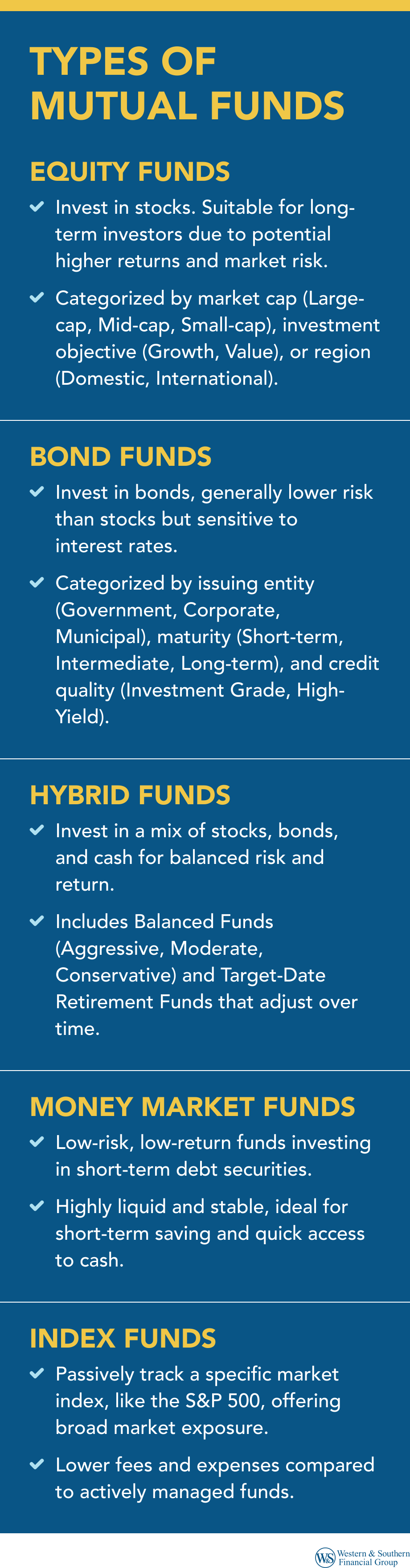
Mutual Funds Guide: Understanding different types of mutual funds and how steady investments like SIPs impact wealth creation.
Seeing Market Dips as Opportunities
Market dips lower mutual fund prices. This lets you buy units cheaper through SIPs. Smart investors use this time to their benefit.
Why Investing During Dips Works
Fixed SIP amounts buy more units during price drops.
Your average cost per unit decreases.
Your portfolio gains strength by adding undervalued assets.
Financial advisors often say to “stay the course” during market ups and downs. Using dips to invest more is a smart way to grow wealth. The Economic Times shares several insights about how market dips are the perfect opportunity for SIPs. The article presents six powerful strategies to compound wealth, highlighting the advantage of acquiring mutual fund units at lower prices and setting up for greater returns when markets recover. Mutual Fund Investment
How to Stay Committed to SIPs in Tough Markets
Staying steady with your SIPs helps you get the most from your investments, even when markets are shaky. Here are some ways to stay on track:
Set clear goals: Keep your eyes on your long-term plans, not short-term market moves.
Automate your SIP: Using auto-debit keeps your investments regular with no emotional interference. Mutual Fund Investment
Review your portfolio occasionally: Check your investments once or twice a year without panicking.
Learn about markets: Understanding how markets move can stop you from making rash decisions.
Guide to Investing in Mutual Funds: Visual tips for disciplined and effective investing through SIPs.
Conclusion
Mutual fund investment through SIPs offers a steady way to grow your money. Stopping SIPs when markets dip goes against the whole idea of rupee cost averaging. It leads to missed chances to buy at lower prices and hurts future gains. Keeping your SIPs active through market ups and downs helps your money grow through the power of compounding and smart buying. If you want to build a strong investment portfolio, you must keep investing in SIPs, especially during market downturns. It is not just a good idea—it is key to steady, real growth with Mutual Fund Investment.
Watch: Investing Basics – Why SIPs Matter
For investors looking to better understand the fundamentals of mutual funds and SIP investing, here is a concise and engaging video that explains the core concepts and benefits of Mutual Fund Investment as a long-term wealth-building tool.